
How to Search Civil Dockets
Superior civil cases start online. Go to Georgia Courts E-Access, pick Fannin Superior, and follow the PeachCourt link. PeachCourt requires an account. Its public login reveals nothing about the case-search fields, result layout, document charges, or any limits. A known case number is the best first move. Without one, bring full party names, an approximate filing date, and the court.
- Identify Superior, Magistrate, or Probate from the pleading or notice.
- For Superior, sign in through the official PeachCourt route.
- Match the case number, parties, filed date, type, and current status.
- Read later orders before treating a motion as granted.
- Use the responsible clerk if the file is missing or not online.
Phone and counter work well here. The Superior Clerk answers at 706-632-2039, and the office sits at 400 West Main Street. Magistrate takes calls at 706-632-5558 and email at magistrate@fannincountyga.org. Probate uses 706-632-3011 and jfalls@fannincountyga.org. Mail and the county open-records request round out the options. Fannin offers no public terminal.
Fannin Civil Filing Form Fields
Georgia's General Civil and Domestic Relations Case Filing Information Form is dependable. It gives a clear picture of what gets collected. Remember what it is, though. The blank form is not a real Fannin case. It also does not prove PeachCourt can search every field on it. The form asks for the court and county. The clerk supplies the case number and the filing date later.
| Parties | Plaintiff and defendant name components. |
|---|---|
| Representation | Attorney, Bar Number, or self-represented status. |
| Case type | One primary category and an applicable subtype. |
| Related action | Checkbox and related case numbers. |
| Access fields | Redaction certification, interpreter language, and accommodation description. |
A related case number is a clue. Never treat it as a duplicate file; search each case and follow its own timeline.
What a Civil Docket Shows
Expect the Fannin County civil docket to show a lot. It lists the court, the number, parties, lawyers, filed documents, service activity, motions, responses, settings, orders, and status. A short register line may only name a filing. The pleading or the order carries the full text. One motion entry is a request, not a ruling. So resist reading it as a decision. A closed status is not erasure either. It may never say why the matter ended.
| Caption | Named parties and their roles. |
|---|---|
| Filed entry | Date and title of a petition, answer, motion, response, or order. |
| Service | Notice or return activity when recorded. |
| Setting | Hearing type and scheduled date. |
| Disposition | Judgment, dismissal, or other final action when entered. |
Fannin Magistrate Needs Another Route
Fannin Magistrate Court handles small claims, garnishments, abandoned motor vehicle cases, and dispossessory matters. Its civil jurisdiction covers claims of $15,000 or less. Dispossessory proceedings are excluded, as the county describes them. The county also notes that Magistrate is not a court of record. There is no public name or case portal. So contact Suite 202 by phone, email, counter, or the linked open-records route. The court page connects to Georgia Magistrate forms and eFileGeorgia. A filing service, though, is not proof of a public Fannin docket search. The official Magistrate page shows the separate office and its access details.
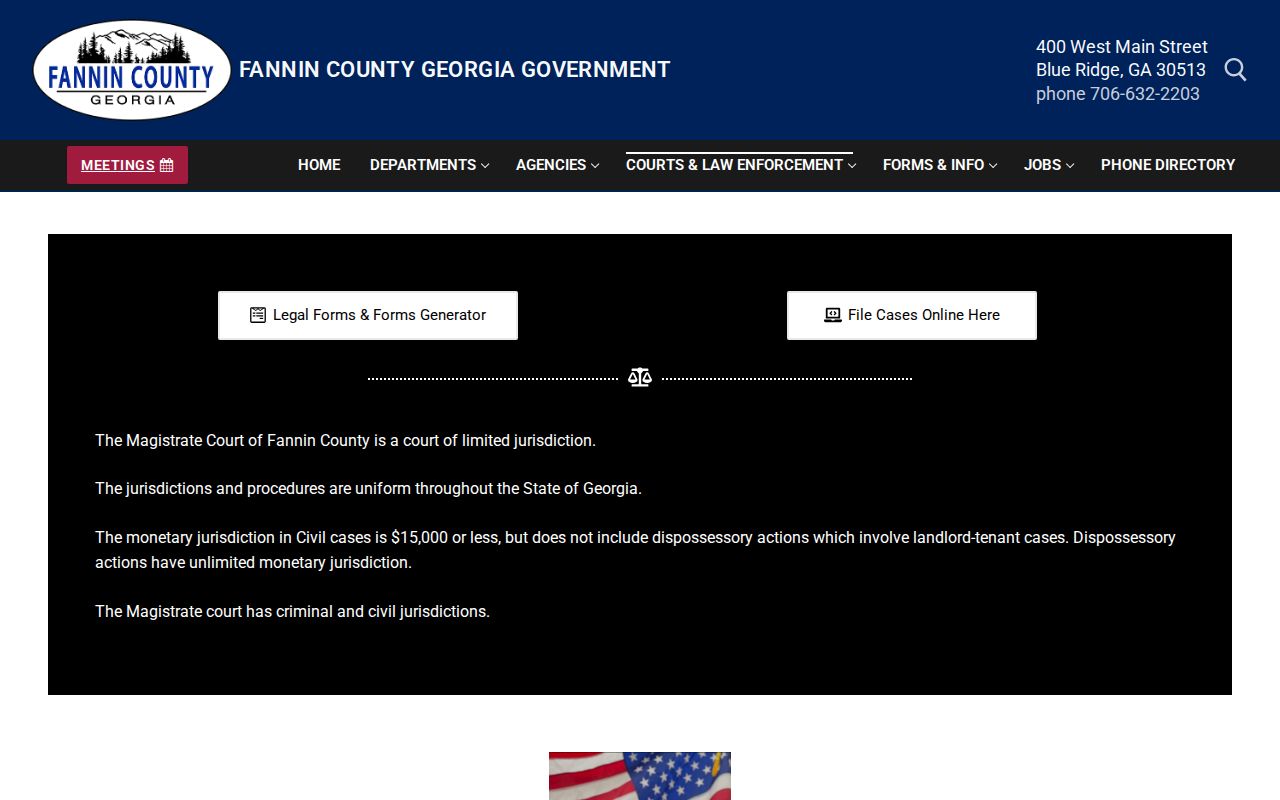
The office profile explains why a Magistrate case should never be searched as a Superior case.
Types of Civil Cases on the Docket
Georgia's filing form sorts Superior civil cases into categories: tort, contract, appeal, post-judgment, garnishment, habeas, writ, medical or product liability, real property, and restraining petitions. Domestic options run from divorce and support to custody, visitation, paternity, modification, adoption, and family violence. Treat every label as a filing description, not a finding.
| Fannin court | Typical record groups |
|---|---|
| Superior | General civil, domestic relations, equity, land title, and permitted appeals |
| Magistrate | Small claims, garnishment, abandoned vehicles, and dispossessory |
| Probate | Estates, wills, administration, year's support, guardianships, commitments, and related orders |
Probate differs sharply. It is a court of record and keeps permanent minute books, apart from information barred by law, yet it posts no public case-search portal.
Fannin Related Cases Need Care
The civil filing form carries a related-action checkbox plus space for other case numbers. That relationship can supply useful context. It does not merge the files. Parties, claims, orders, and status can all differ, so open each number and confirm its caption and court.
Common mistake: A petition is not an order, a related case is not the same case, and a case-type box is not a legal conclusion.
The filing form's self-represented checkbox is only a snapshot from the filing date. Counsel may appear later. Read the entries in date order, and when legal effect matters, get the signed document.
Settings and Hearings on Civil Dockets
A Superior civil matter gets set through a Rule Nisi presented to the assigned judge. The judge may pick the date. Or the judge can have the clerk place it on a regular civil nonjury calendar. Expect judge authorization for anything lasting more than two hours. The 2026 master calendar uses the label CV NJ. That label marks a civil nonjury setting, not a judgment. Check every setting against the individual notice and later docket entries. A continuance or reset only moves the date; it never disposes of the case. The full Fannin County court calendar process walks through circuit, lower-court, and city date channels. When a date conflicts with the notice, call the assigned clerk.
Fannin Standing Orders Shape Filings
The Appalachian Circuit keeps standing orders covering case assignment, copies of motions and responses, domestic relations, affidavits of poverty, e-filing, weather, recording, and other procedure. These rules can shape which judge receives a case and how a paper reaches the record. The official standing-order index is the current starting point.
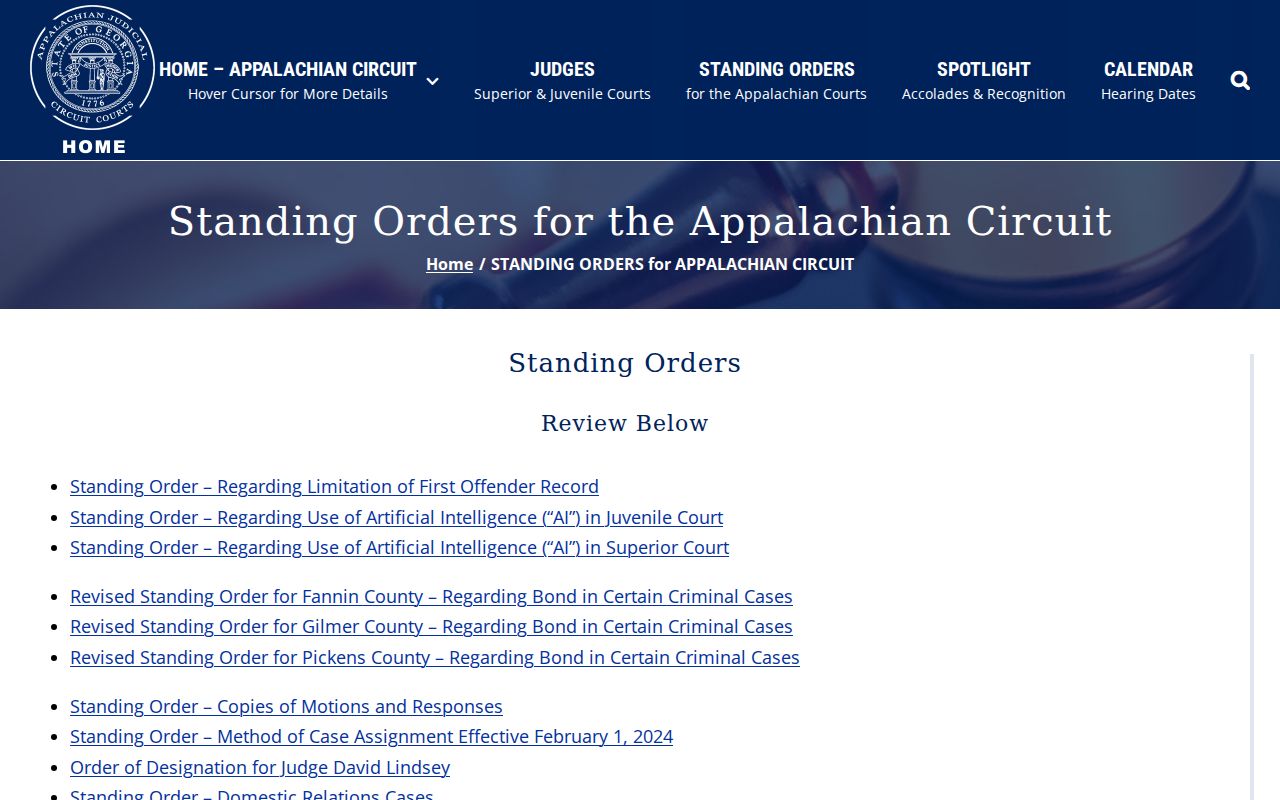
Context helps, but the case docket and the signed case-specific orders still control any individual result.
Public Access to Civil Dockets
Uniform Superior Court Rule 21 begins with public court records but still allows lawful limits. Rule 21.6 and O.C.G.A. §9-11-7.1 protect identifiers. The civil filing form carries a redaction certification. Sensitive family, health, and financial facts may be redacted or restricted. Public access does not mean unrestricted online display.
Rule 21 requires a defined legal process for limiting Superior records. Ask the clerk for a releasable or redacted portion and the basis for any restriction.
Fees are modest. Under the county open-records route, the first fifteen minutes of search time are free, and copies generally run ten cents per page. Ask the clerk to confirm cost and copy type, since no complete court certification fee appears.
When Fannin Civil Searches Miss
Start with the basics when a Fannin County civil docket search comes up empty. Was the court level right? Was the name spelled exactly as filed? Check the date and the case number too. A deed, lien, or plat sitting in the Clerk's Real Estate Division may look like a lawsuit. It is not one. Older paper files, provider limits, redactions, and sealed orders can all hide a case from view. And if the dispute is federal, PACER is where it lives. Civil cases arising in Fannin County are handled by the Northern District of Georgia, Gainesville Division.
When you contact the clerk, keep the request narrow. Name the court, the parties, and the approximate date. Give the case number if you have it, plus the exact pleading or order you need. Ask whether you want plain copies or certified ones. Staff will pull court records for you. But they cannot read a docket for you or hand out legal advice.
Once the file surfaces, read the chronology with care. Service and return entries only prove that notice activity happened, not that anyone won. A continuance moves a date and nothing more. A response answers a request without deciding it. The judge's direction appears in an order. The final result sits in the disposition or judgment. Exhibits, transcripts, and audio often need their own request. A docket does not promise that every item is attached online.
Probate records go through Jennifer Falls's office, which can explain the minute-book or copy route. Magistrate claims belong to Cassie Rymer's office; just identify the type of claim. For Superior matters, Dana Chastain's Judicial Division holds the original record. That split saves delay and keeps each civil request with the right court.